Bitcoin Hashrate Decline: The Impact of AI and Energy Resource Competition
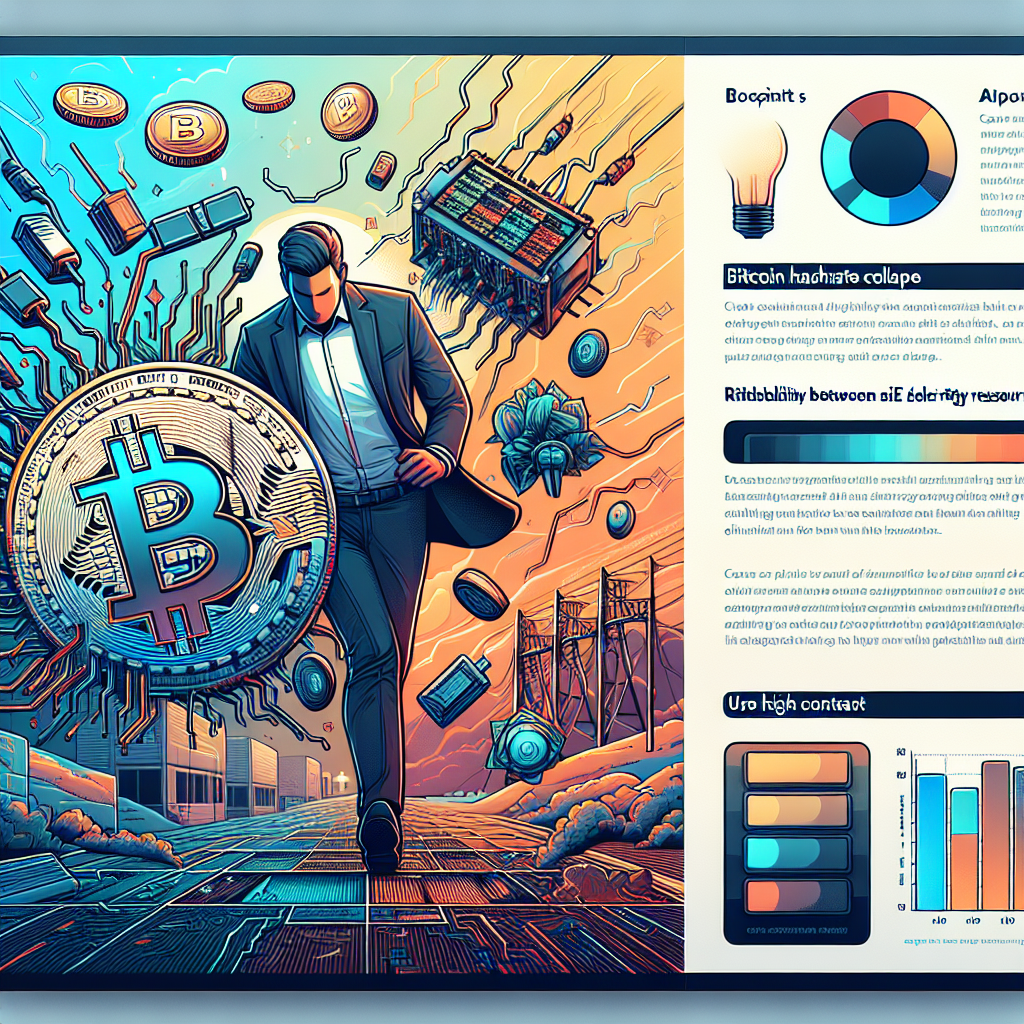

The cryptocurrency landscape is continuously evolving, with Bitcoin remaining at the forefront of this digital revolution. Recently, the Bitcoin network has seen a significant decline in hashrate, dropping below 1 zettahash for the first time in four months. This decline raises questions about the sustainability of Bitcoin mining, especially in the context of rising energy demands from artificial intelligence (AI) operations. In this article, we will explore the implications of this hashrate decline, the role of AI in energy consumption, and what it means for the future of Bitcoin mining.
Understanding Bitcoin Hashrate
Hashrate is a critical metric that represents the computational power used to mine and process transactions on the Bitcoin network. It is measured in hashes per second (H/s), with higher numbers indicating more computational power and security for the network. A hashrate drop can signal potential instability within the network or suggest that miners are reallocating resources elsewhere. Recently, Bitcoin’s hashrate fell to 993 exahashes per second, below the 1 zettahash mark for the first time since September of the previous year.
This decline is noteworthy, especially as it follows a period of improved mining profitability due to lower mining difficulty. The relationship between hashrate and mining difficulty is crucial; lower difficulty usually enables more miners to participate and earn rewards, thus stabilizing the network. However, the current situation indicates a shift in focus among miners, driven by external factors like AI.
The Rise of Artificial Intelligence and Its Energy Demands
In recent years, the rise of artificial intelligence has spurred significant advancements in technology but has also led to increased energy consumption. AI operations, particularly those involving machine learning and data processing, require substantial computational power. As a result, many energy-intensive AI applications are competing directly with Bitcoin mining for available energy resources.
Leon Liu, CEO of Standard Hash, noted that Bitcoin mining companies are beginning to reallocate their energy resources to AI computational services, seeking higher profitability. This shift suggests that the competition for energy resources is becoming more pronounced, which could lead to further declines in Bitcoin’s hashrate as miners prioritize more lucrative AI operations over traditional mining.
Market Dynamics: Mining Profitability and Debt Pressure
The Bitcoin mining industry has faced dual pressures in recent months: declining profitability and increasing debt. Mining profitability is affected by various factors such as Bitcoin’s price, network difficulty, and operational costs including energy. In an environment where these factors are unfavorable, miners often struggle to maintain their operations, leading to financial stress.
Last year, analysts labeled 2025 as potentially the most challenging year for Bitcoin mining due to expected market conditions. This pressure has forced some mining companies to pivot and utilize their existing infrastructure for AI and high-performance computing, seeking to diversify their revenue streams.
Hashrate Measurement: Statistical Anomalies and Real-World Implications
It’s essential to understand that hashrate metrics can sometimes be misleading. For instance, some companies, like Bitmain, may operate their hashrate through unofficial channels or partnerships, which could result in underreported statistics. This scenario implies that the actual network hashrate might be higher than what is statistically recorded.
Such discrepancies can create confusion in the market and could lead to misguided assumptions about the network’s stability and security. Therefore, it is crucial for investors and stakeholders to consider both the statistical data and the operational realities of mining companies.
Future Outlook: Bitcoin Mining in an AI-Dominated Landscape
The intersection of Bitcoin mining and AI presents both challenges and opportunities. On one hand, the competition for energy resources could lead to a decline in Bitcoin’s mining activity, potentially affecting its network security. On the other hand, mining companies that can effectively integrate AI operations with their mining activities may find new avenues for profitability.
As AI continues to expand, the mining sector must adapt to these changes, possibly leading to innovations in energy efficiency and operational practices. Companies that invest in sustainable energy solutions or hybrid models combining mining and AI may have a competitive edge in this evolving landscape.
Community Response and Industry Adaptation
As the industry grapples with these changes, community responses will play a crucial role in shaping the future of Bitcoin mining. Many stakeholders are calling for greater transparency and innovation within the mining sector. The push for more sustainable practices and efficient energy use is becoming increasingly relevant, especially in light of the environmental concerns surrounding cryptocurrency mining.
Additionally, the adoption of regulatory frameworks aimed at balancing energy consumption between mining and AI operations could also emerge. Such regulations may help ensure that the Bitcoin network remains robust while accommodating the growing demands of AI technologies.
Conclusion
The recent decline in Bitcoin’s hashrate highlights the complex dynamics at play within the cryptocurrency ecosystem. As AI continues to gain traction, the competition for energy resources is likely to intensify, forcing miners to adapt their strategies. It is crucial for stakeholders to stay informed about these trends and to consider how they might impact their investments and operations in the future.
In summary, while the current situation presents challenges, it also offers opportunities for innovation and growth within the Bitcoin mining sector. Stakeholders should be proactive in exploring new avenues for profitability and sustainability as they navigate this evolving landscape. Don’t miss out on maximizing your returns—get up to 85% back on exchange fees today! Visit https://cashback100.co.kr/go/payback.


